October 30, 2010

Burger King Deliberates the More Mindful Burger

On a sunny and seasonably cool October Sunday afternoon, with lunch time upon us, the Burger King and one of his burger minions journeyed to a fairly recent addition to Chicago’s burger scene: Epic Burger.

A number of burger houses have popped up all over Chicago in the past few years. Based in a relatively bustling strip of Lincoln Park near North Avenue, Epic, not unlike rivals such as Five Guys or The Counter, isn’t necessarily an upscale dining establishment, but it is leaps and bounds above traditional fast food eateries. Touted as a “more mindful” burger, Epic offers patrons an assortment of refined options to assist in building their desired burger, including cage-free organic eggs and whole-wheat buns. Choice alternatives are available for those looking to avoid red meat, such as all-natural chicken breast or portabella mushroom sandwiches. Still, the burger reigns supreme at Epic, and burgers are this king’s business.

The hungry handful in line ahead of his Majesty dissipated swiftly upon our arrival, making the wait time quick and painless. For the King, the choice was simple: The all-natural Epic burger (a double) with house sauce, lettuce, tomatoes, raw onions, pickles, and Wisconsin cheddar on a whole-wheat bun. Unfortunately, Epic lost some points on serve time, with the order finally arriving after what seemed like well, an epic wait!

The first ostensible item of significance was the pool of grease spreading throughout the brown paper bag in which the burger dwelled--not a good initial sign. After peeling back the sopping wet bag, the real work was upon us. Epic burgers don’t resemble traditional burgers. The meat typically isn’t round, and tends to be somewhat flat, making it appear more like a flank steak than a hamburger. With the first bite, a number of mainly positive sensations ran over the palette. The lettuce, tomatoes, onions, and pickles were all crisp and fresh, with some melty, flavorful cheddar sitting right on top. Even so, those few pleasantries couldn’t mask the two main detractors of the experience: the unoriginal Epic sauce covering the greasy main event.

For starters, this “Epic sauce” differs little from the Thousand Island dressing on McDonald’s Big Mac. Considering that Epic’s prices aren’t exactly competitive with Mickey D's, this was a notable disappointment. Even more unacceptable was the excessive spattering of grease lurking within. This ground beef had been violated, so much so that it could barely keep itself together, crumbling apart after each bite. As the halfway point approached, few features of the burger were able to triumph over the extreme grease seeping from the meat. The bitter (or, more appropriately, oily) end was not far off. The remaining half was abandoned, transported to the nearest receptacle for prompt termination.

Despite the favorable reviews from legions of faithful Chicago locals, this is not a burger worth exploring. Costs are steep for the experience, and the experience is unsatisfactory, clocking in at nearly $10 for a double cheeseburger by its lonesome. In this type of burger class, whereby diners aren’t looking for burgers on either end of the price spectrum, Five Guys remains the ruling champion.

September 22, 2010

The Flame Still Burns Bright at Naha (for the most part!)

In New York, what's hot remains that way for approximately as long as Britney Spears stays married. Chicago's relationship with its hot spots, though, is decidedly more long term. Sure, the must-try new restaurants of the early 2000s—MK, Blackbird, and Naha—may not inspire the sort of excitement they did when their doors first opened, but they still enjoy a loyal following.

I wouldn't laud such loyalty if it weren't well-deserved. There's nothing worse than clinging to a relationship long after the magic has died. Yet Naha remains both filling and fulfilling after all these years. That's at least partly because it's managed to stay fresh inside the kitchen and out.

On the latter score, Naha's clean-lined, vaguely Zen-like, formal-without-really-feeling-like-it space is still modern, but warmly so. More importantly, chef (and Chicago native) Carrie Nahabedian's seasonal, mostly Mediterranean-inspired cuisine largely struck the right notes, though at times I thought there could be fewer of them.

Take the scallop appetizer, for instance. I could barely detect the promised vanilla bean flavor, maybe because it couldn't compete with the accompanying endive, hearts of palm, musk and watermelons. That said, the scallops were thick, lightly sweet, and perfectly cooked. And had the vanilla flavor been more pronounced, it might have become cloying, an outcome that would've been much worse.

Where the complexity worked especially well was in my main course dish. The squab, a Naha specialty, showcased Nahabedian's affinity for Middle Eastern flavors. Served along with raisins, dates, and a noodle cake--a sort of noodle patty crisped on the outside--the squab came cooked a rosy medium rare along with a melt-in-my-mouth piece of foie gras (I'm hesitant to say that it was so good it shouldn't be legal, but I don't want to give any Chicago pols any ideas. Banning it once was enough.) My favorite element of the entire dish was the rose, licorice, gooseberry, and anise sauce coating the plate. I'm not sure anyone could distinguish between its many different components--what is gooseberry anyway?--but that just may be the point: The sum of the flavors are much greater than the parts.

My boyfriend tried the Arctic char. I won't say too much about it since I got just a bite, but I can't blame him for keeping the lion's share to himself. Ordinarily I'm not a big fan of char, which usually makes me think I'm eating salmon's bastard child. Yet at Naha, it was flaky, moist, and had a flavor profile of its own.

Dessert, however, was a big disappointment. I anticipated the pain perdu, or French toast, would arrive moist and eggy but it was little more than a browned piece of brioche. And sadly, the strawberry topping was little better than one might get at the IHOP. At $14, that may have been the most expensive piece of toast I've ever had. (Our experience may be an anomaly, though. Flaky Pastry has fared much better, and she's a far higher authority on dessert than me).

Naha surely isn't for penny pinchers. The average entrée hovers near $40, and dessert is $14 no matter what you order. (Prices for the appetizers are similarly steep. A simple sounding beet salad clocked in at $17.) I may have found those price tags are easier to stomach thanks to Naha's well-crafted cocktails. Those cost me too, but even in the best of relationships, you sometimes need a stiff drink.

September 6, 2010

When Push Comes to Chevre...

Goat cheese is a quintessential summer ingredient. It's soft, spreadable, crumbly, tangy, and creamy all at once. A great biography on goat cheese can be found here, but generally, it's known to be lower in fat and higher in vitamin A and potassium than cow's milk. Also, people who have a lactose intolerance for cow's milk find goat milk products easier to digest.

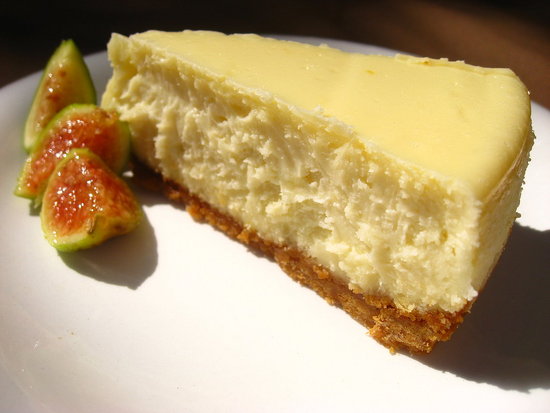
Our household is unfortunately undergoing a bit of a tolerance regime change in our older age, but we're also nuts for cheesecake and pizza around here. So this summer, we tried our hand at pizza with goat cheese (superb!) and this weekend--a goat cheese cheesecake! It still had plenty of other cow's milk products in it (mascarpone and cream cheese), but because those ingredients were cut down to make way for the flavor boom that is goat cheese, our bellies and our palates were quite satisfied. I served it buffet-style with three sauces: seedless raspberry port wine sauce (8 ounces of seedless raspberry jam simmered in about a cup of sweet port wine), my hot fudge sauce, and a beautiful, silky butterscotch sauce. (I'll include that another day, otherwise this blog entry will be too long to bother with!)

The key is to make sure all your cheeses are room temperature, otherwise you'll suffer with lumps. I did not add sugar to the crust either. I felt with the amount going into the filling plus the sauces, it was not necessary. If you like a sweeter crust, start with 1/4 cup granulated sugar and try it once that way. If you think it needs more, go up to a half cup next time. Also, the original recipe called for a vanilla bean split and scraped, but I save my vanilla beans for things that need steeping in cream or milk, like ice cream and chocolate truffles. I prefer using vanilla bean paste when it's part of the presentation that we actually see the vanilla flecks. It's cheaper than whole vanilla beans and more concentrated than extract, so it provides the overall effect I'm looking for without too much expense. Last but not least, I used a water bath with this one, which I generally don't because most of my cheesecakes have some sort of topping that masks the cracked top that occurs when baking cheesecakes. Doing a water bath is not hard and is well worth it for a party-worthy presentation!

As we hang onto these last days of summer, I'd highly recommend putting your springform to work on a new kid in town. Your tastebuds will thank you!

Goat Cheese Cheesecake (adapted from The Last Course, by Claudia Fleming)

2 cups graham cracker crumbs
1/4 to 1/2 cup granulated sugar (optional)
1/2 cup (1 stick) unsalted butter, melted

12 ounces cream cheese, room temperature (1 1/2 bricks)
8 ounces fresh goat cheese (1 large log or two small ones), room temperature
1 cup sugar
1 tablespoon vanilla bean paste
1 1/2 cups (12 ounces) mascarpone cheese, room temperature
4 large eggs, room temperature

Preheat oven to 350℉. In a large bowl, combine graham cracker crumbs and sugar (if using), and mix well. Add melted butter and stir until combined. Press evenly into bottom and sides of 9-inch springform pan. You will use all your mixture. Bake for 8 minutes until set. Remove from oven to allow to cool and reduce oven temperature to 325℉.

In a separate large bowl, combine cream cheese, goat chese, sugar, and vanilla paste and beat with an electric mixer until smooth and creamy, about 3 minutes. Add the mascarpone and beat until smooth (another 1-2 minutes). Add the eggs individually, scraping down sides and bottom of bowl after each addition. Scrape bottom and sides of bowl one last time and mix well for 30 seconds.

Tightly wrap outside of prepared pan with aluminum foil, making sure there are no gaps. Pour mixture into pan and place in center of a larger baking pan with at least 2-inch sides. Pour enough hot water into the larger pan (not your cheesecake!) to reach two-thirds up the side of the springform pan. Cover the entire baking pan with foil and pierce in several places to allow for steam release. Bake 1 hour, then lift off a corner or two of the foil for additional steam release, and bake 50 minutes longer, or until cheesecake looks set around the edges but is ever-so-slightly jiggly in the center.

Transfer cheesecake to a wire rack to cool completely, then chill in refrigerator at least 3 hours before serving. Cheesecake can be made up to two days ahead and will keep, refrigerated, for about a week. Serves 12-16 pretty darn generously! Serve with sauces or seasonal fruit.

August 30, 2010

The Sugar Art of Learning

Many apologies for my lack of presence here. It's been one crazy summer (wedding season for a pastry chef always is), but I did manage to cram in a little continuing education for myself last week in Atlanta at the famed International Sugar Art Collection. I've taken classes with Chef Nicholas Lodge here in Chicago at my alma mater, The French Pastry School, and I have longed for an opportunity to go to his school down south and learn from the master of sugar artistry. You've probably seen him on Food Network, where he often serves as a judge for Wedding Cake Challenges and other cake-oriented insanity cable television is notorious for. But a day or two (or four, in my case!) in his classroom is like Cake Artistry 101, 201, 301, and 401 all at once! I learned more about recent fondant and gumpaste trends than I ever would struggling at home with books from Amazon. Well worth the trip and tuition!

Here are some of the all-stars from my four days there. See the captions in the Flickr roll for a description of the type of sugar artistry used in each example. I am excited about being able to offer these elements for cake orders going forward. Care to place an order??

July 31, 2010

Have a Ball!

Cake balls/pops/truffles/etc. seem to be all the rage these days. People have been asking me for some time what the next big thing after cupcakes will be, and I think this may be it. Bakeries all over the country have started offering them because they help make use of "cake droppings," as I like to call them. These are all the cake crumbs you're left with after a week of leveling cakes for stacking, filling, and frosting.

Basically, you take a 9" x 13" cake pan full of crumbs, add about 2 cups of frosting (perhaps less, depending on how moist your initial cake recipe is), squish it all together, and make balls about 1-2 inches in diameter. Freeze them individually on a sheet pan for 20-30 minutes and dip in tempered chocolate or chocolate coating. They're really cute on miniature cupcake liners, all boxed up and ready to go for party favors, hostess gifts--you name it!

Bakerella has made cake pops a worldwide phenomenon through her blog and now soon-to-be published book. These take a lot more effort but are probably worth it in the end. I can imagine the reaction you'd get from your crowd! Check out her site and view her amazing gallery of cake pop artistry. The first time I made them, it was more of a deliberate effort. The client wanted them to start with, so I had to bake a cake from scratch (because that's how I roll), crumble it up, make the frosting (because I just don't do canned frosting of course), and mix it all up for the ball "batter." It seemed like a lot of labor to basically have something mini-cupcake-sized anyway. I didn't quite get what the hubbub was about, but knowing its the best way to make use of "cake droppings" these days helps you feel more sustainable in today's waste-conscious society. You can even freeze your cake crumbs for up to 3 months and use them as needed.

I recently made a bunch of cake balls and debuted them at my book club. For years, these wonderful folks have been my test kitchen, and I have soooooo appreciated them for that. Everyone loved them and thought they were one of the best desserts I've brought to a meeting. One longtime clubber actually came up with the name I'll be using to add them to my menu: Bomb-bons! Very sassy and the perfect thing to call something that packs that much of a sugar punch!

So if you're interested in Bomb-bons a la Pomegranate Sweets & Savories, give me a call or visit my site to order some. I'll be posting the available flavors each week. This week, I'm featuring Grandma's Chocolate, Carrot, and Vanilla Buttermilk. And maybe, when Bakerella's book comes out, it might inspire me to work on a pomegranate-shaped one I can call my signature Bomb-bon!

July 19, 2010

Cool Tools: Butter for Brains

I have discovered the whimsical world of Worldwide Fred. Talk about pan addiction! I recently purchased a few pans that have me so excited about what I can do with them, I can't stop thinking about them...

For example, the Brain Freeze set at left, first and foremost for ice, can also double for Jell-O jigglers, panna cotta, and butter! Imagine that served up with your daily bread! I'm even going to try them with melt-and-pour soap base this week and see how those turn out. I could call them Smart Soap...

I also recently purchased the Worldwide Fred Cakewich pan. I haven't made anything yet, but the possibilities are endless, even on the savory side. It comes with a recipe for a vanilla pound cake, peanut butter frosting, and berry compote. But I'm thinking you could even do your favorite white bread recipe with just about any kind of fixings and serve up a big sandwich for the cutting!

All jokes aside though, it's good to always investigate all the possibilities of your novelty pans. I have a fetish for them, so goodness knows I don't always follow this rule of thumb. But I do have a dozen-cavity miniature egg pan from Williams-Sonoma from years ago that not only makes good eggs (no pun intended), but bumblebees, ladybugs, and hedgehogs too. (Wilton makes one too, with only eight cavities though.) The Nordicware baby Bundt pan can make pumpkins, apples, and all sorts of round seasonal shapes (see right). Heck, Bundt pans in general do a lot of things besides your average Bundts. Try this caterpillar cake design some time!

July 1, 2010

S'more Than Enough

I think there's an undeniable fascination going on with the graham cracker + marshmallow + chocolate thing. I have seen s'more options for making s'mores-type goodies this summer than ever before. Having been a Girl Scout who enjoyed my fair share of camping trips and campfires, I adore them! What is it about oozy, chocolatey goodness with a rustic whole-grain crunch? And now, s'more than ever, there are so many ways to work this ooey gooey equation into summer desserts. (OK, I'll stop with the s'moring now...)

Here's a little background on these goodies... The term s'more comes from the phrase "some more"--a typical request when the treat became a regular around the campfire. This article details some history on the s'more, indicating that the first real recipe was cited in a Girl Scout handbook in 1927. Marhsmallows were an easy-to-transport item along a hiking trail and warmed up nicely over a campfire. Chocolate bars and graham crackers were also just as portable, and so all these items came together in a sticky sweet treat that became synonymous with the great outdoors.

Lately, more varieties of desserts have oozed onto the scene, using these three elements, only in different ways. This cookie recipe from Martha has me wondering whether a "graham-like" cookie would be more satisfying than a graham cracker. They sure are cute little buggers and would make a great presentation at a winter tween slumber party, when you need to fake a campfire with your good ol' gas oven. (Pretend the pilot light is your open flame.)

Or if you really wanted to go all-out Martha, you could seriously impress your friends by putting together one of these for a weekend getaway: the S'mores To-Go Box! Real homemade marshmallows are included in Martha's version. I must admit, once you've had a homemade one, it's hard to go back to ye ol' store-bought Kraft marshmallows. There is some sort of melt-in-your-mouth madness going on with homemade versions that beckon you to their side. You've got to try it at least once before you knock it. It's not a time-consuming task, but without the preservatives that store-bought ones harbor, just remember that homemade doesn't last as long. The major plus though is that you can flavor them any way you like. I put strawberry Nestle Nesquik or cocoa powder in mine and sometimes mix them up for holiday gift-giving in a sort of Neapolitan pack.

But so far, my favorite rendition of this classic treat has been the s'mores brownie with marshmallow ice cream concoction I put together a few weeks ago for an impromptu dinner party with friends. It starts with this brownie recipe from the Food Network, topped with chocolate buttercream, and accompanied by a scoop of marshmallow ice cream. I eliminated the marshmallow topping in the brownie recipe and served a chocolate-frosted brownie with a scoop of marshmallow ice cream on the side. Of course this one can't be passed around a campfire on a camping trip, but it sure can make a rather metropolitan spread feel like a campsite. Just play your nature sounds alarm clock in the background while you plate it up!

August 10 in National S'mores Day, so you have some time to experiment on which of the above you'll treat yourself to that day. That's s'more than enough time!